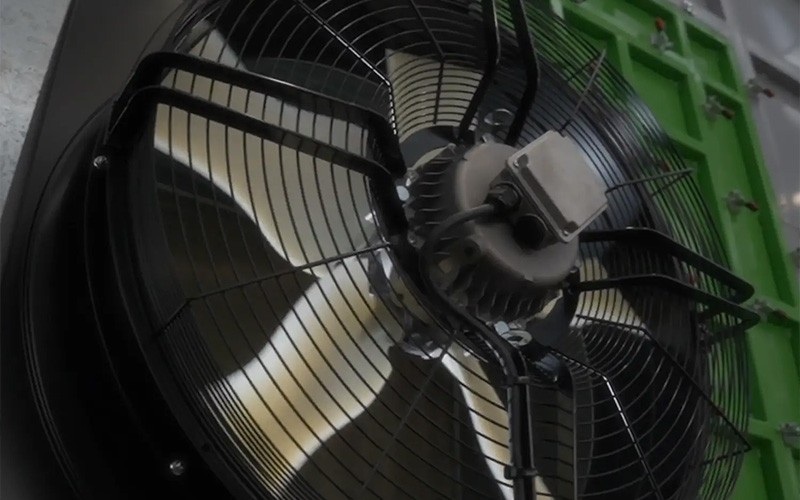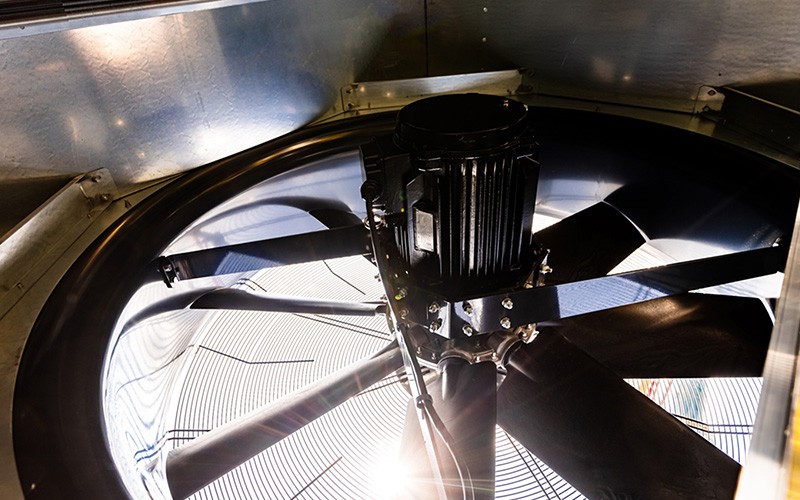
As AI data centres move more heat into external cooling systems, fan size is becoming a critical system-level decision. Here are the key facts behind larger, modular axial fans—and why fewer, slower-running units can reduce complexity, noise and energy use in modern heat-rejection applications.
When high‑temperature airflow becomes a hot topic
As data centres run hotter and cooling demands intensify, fan performance is becoming a critical part of system reliability. Here are the key facts behind high-temperature EC fans—and why modular, serviceable solutions matter in modern heat-rejection applications.

Joe Landrette
VP Product Management
1 min read
May 27, 2026
AI, cloud solutions and denser racks are increasing thermal loads across modern data centers. To improve energy efficiency and reduce chiller dependency, operators are raising process-water temperatures.
That creates a hotter and more demanding cooling environment.
As more thermal load is pushed to the air side of the system, dry coolers, adiabatic condensers and other heat rejection units must handle higher air temperatures, higher static pressure and longer operating hours under challenging conditions.
For standard EC fans, that can be a problem. Many are designed for conventional HVAC duty, not continuous operation in air temperatures that can reach 70–80°C. For engineers and procurement teams, the question is no longer just how much air a fan can move. It is whether it can keep doing it reliably when the system gets hot.
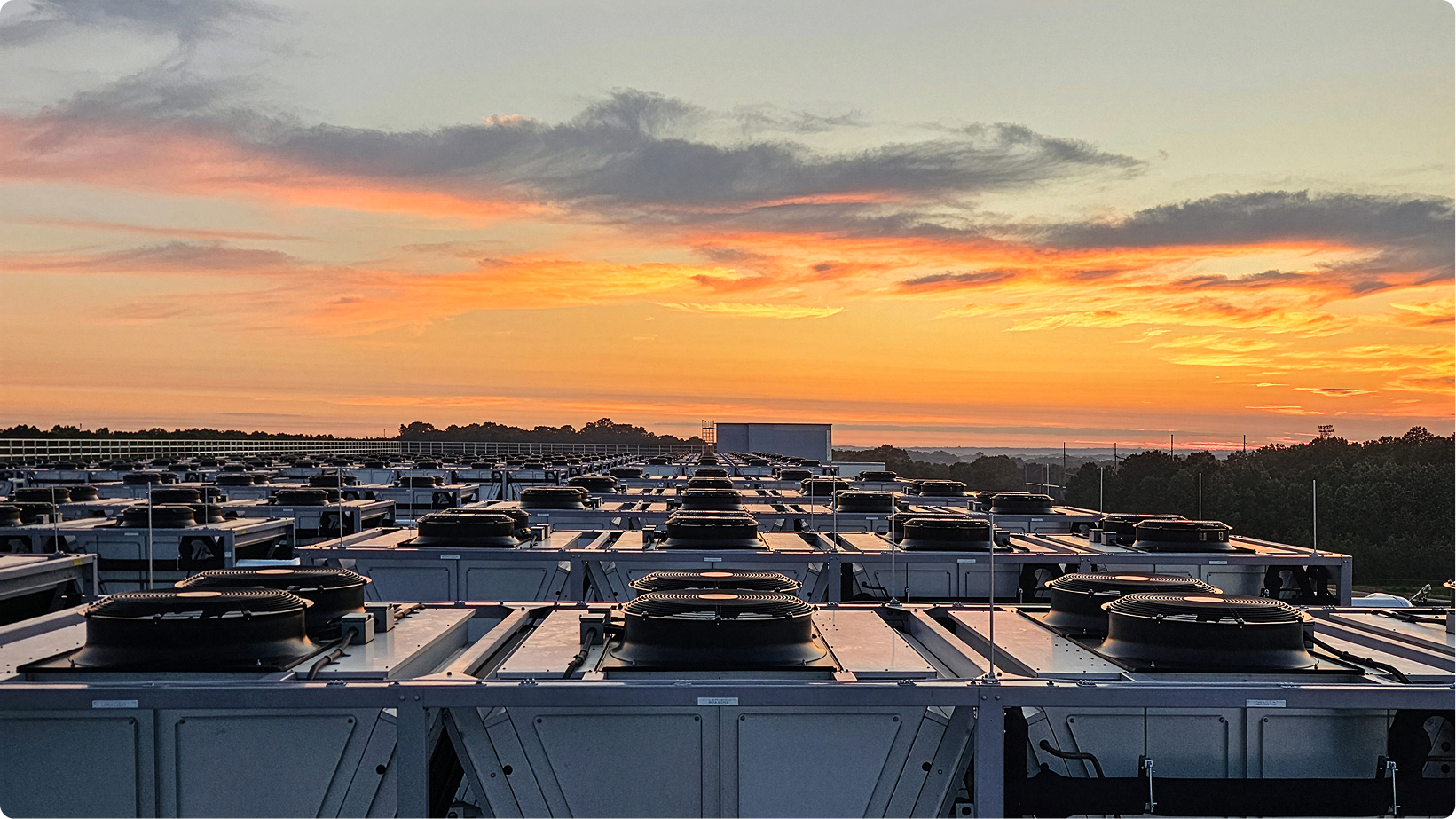
Up to 80°C continuous operation
High-temperature operation is no longer a niche requirement. In data center cooling, fans are increasingly exposed to hotter air for longer periods of time.
The problem is not only the fan itself. In many standard EC fan designs, the drive electronics are integrated directly in the motor and exposed to the same hot process airflow. Over time, that heat can accelerate ageing of critical electronic components and reduce long-term reliability.
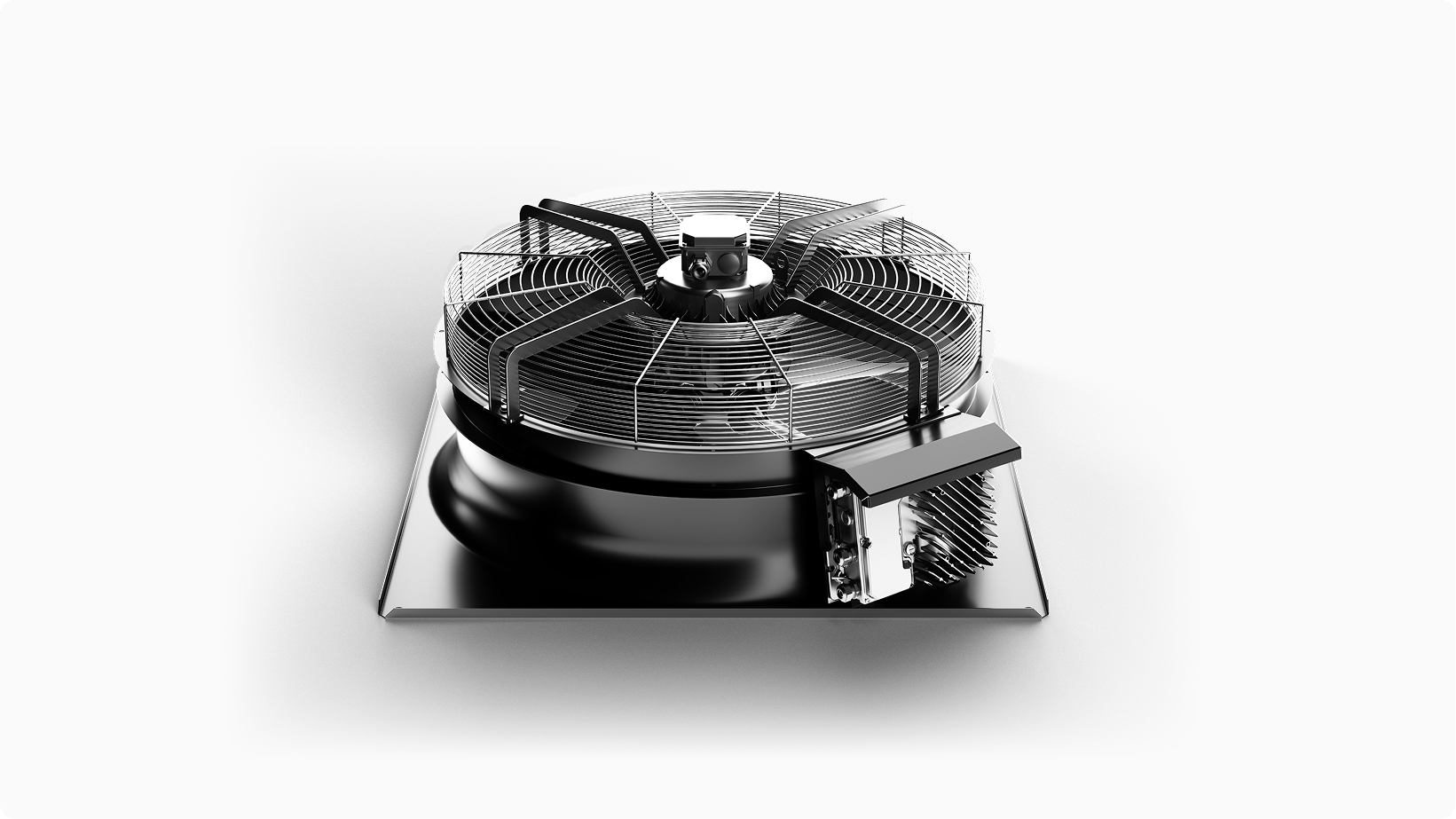
Multi-Wing’s high-temperature EC fan platform is designed for continuous operation up to 80°C. By moving critical drive electronics outside the hot airflow, the external control unit can be placed in a cooler, more accessible area. This helps improve electronics lifetime, simplify maintenance and support stable performance in demanding applications.
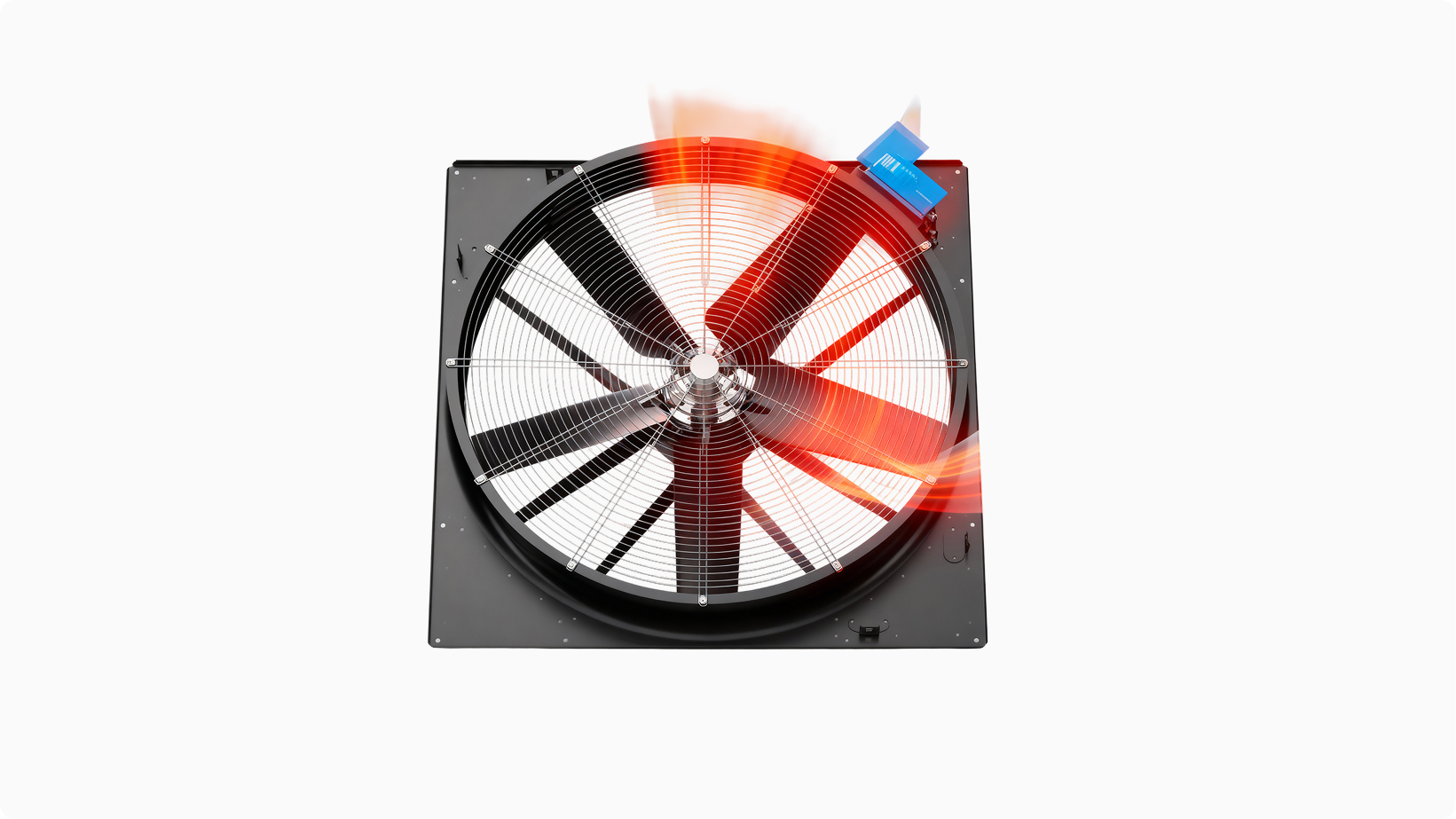
Better control, better performance
EC technology gives engineers and operators precise control of fan speed. That makes it easier to match airflow to actual cooling demand instead of running the system harder than necessary.
For data centers, this matters. Cooling systems often need to respond to changing loads, changing ambient conditions and strict efficiency requirements. Intelligent speed control helps improve energy performance, reduce unnecessary wear and support more stable operation across the full system.
Compared with traditional belt-driven AC fan systems, EC fans also remove belts, pulleys and alignment work from the equation. Fewer mechanical parts that can wear means less maintenance and fewer potential points of failure.
Higher
efficiency
efficiency
especially at partial load
Direct-drive operation
eliminating belts and mechanical losses
Precision speed control
matching real-time cooling demand
Built for larger, more demanding systems
As data center cooling systems become larger and more performance-critical, fan size becomes part of the engineering strategy.
Because of their larger diameter, these fans can deliver the required airflow with fewer revolutions, supporting better efficiency and lower noise. This can help improve energy-to-airflow performance, reduce aerodynamic noise and simplify system layouts. In many retrofit or redesign scenarios, one large fan can also replace several smaller fans, reducing the total number of motors, connections and components.
For OEMs and system designers, this creates a more efficient way to build capacity into dry coolers, condensers, cooling towers, AHUs and other demanding HVAC applications.
Modular design makes the difference
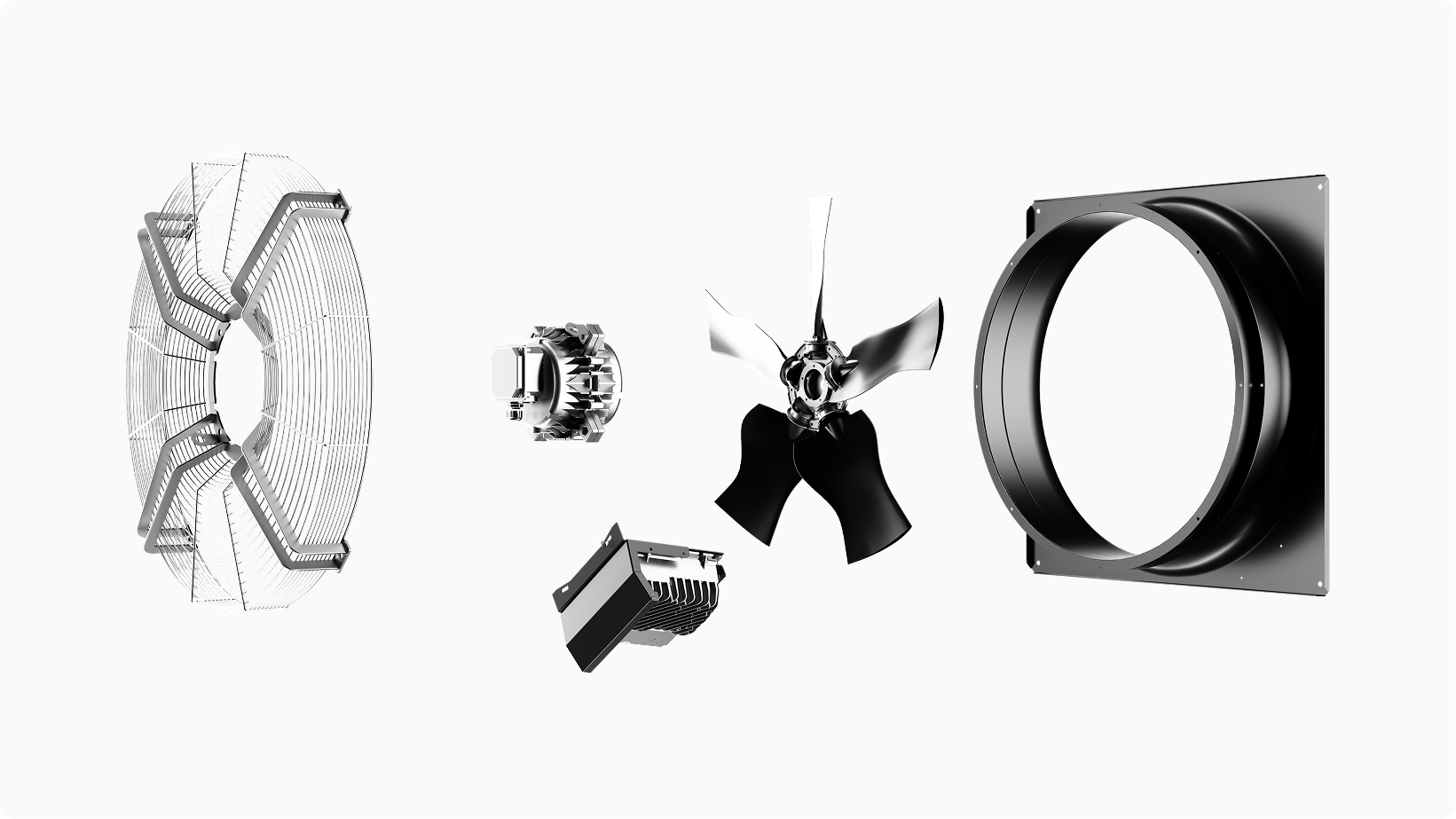
Not all large fans are the same. Many conventional fans are built around a fixed design: one blade shape, one pitch angle and one standard configuration. That can make it difficult to optimize performance for a specific application.
A modular fan platform gives engineers more options. Blade number, blade profile, pitch angle and diameter can be configured to match the actual duty point. Instead of adapting the system around the fan, the fan can be tailored to the system.
For procurement teams, that means a more application-specific solution. For engineers, it means a better balance between airflow, pressure, acoustics, efficiency and durability.
Fan facts in short
Modern data center cooling requires fans that can do more than standard HVAC units, they need to
handle higher temperatures
deliver higher pressure
support efficient control
be serviceable, scalable and reliable
Multi-Wing’s high-temperature, modular EC fan platform is built for exactly that: demanding heat rejection applications where performance, uptime and long-term efficiency matter.