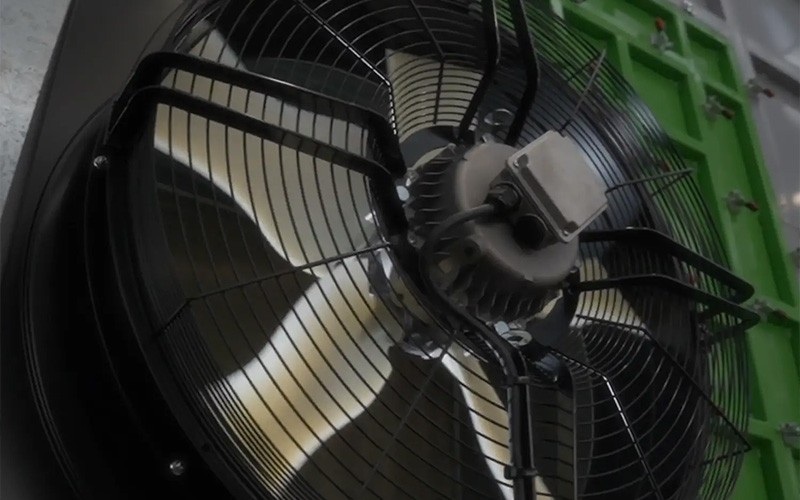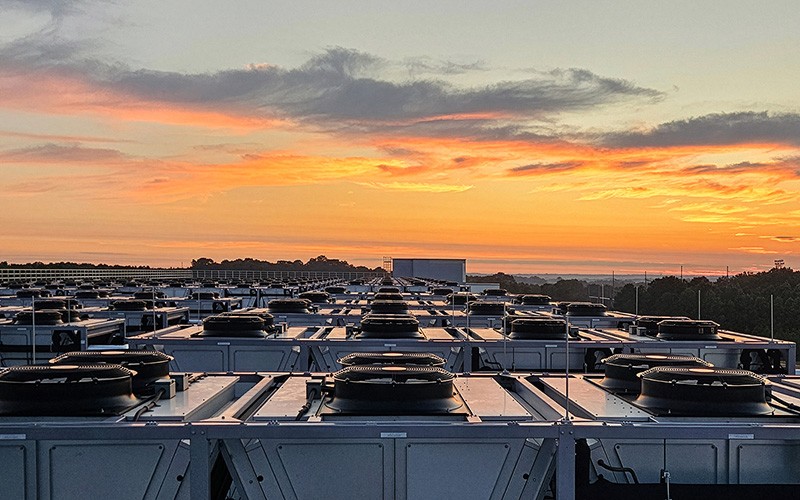
As data centres run hotter and cooling demands intensify, fan performance is becoming a critical part of system reliability. Here are the key facts behind high-temperature EC fans—and why modular, serviceable solutions matter in modern heat-rejection applications.
Thinking big about fan size in modern cooling systems
As AI data centres move more heat into external cooling systems, fan size is becoming a critical system-level decision. Here are the key facts behind larger, modular axial fans—and why fewer, slower-running units can reduce complexity, noise and energy use in modern heat-rejection applications.

Joe Landrette
VP Product Management
1 min read
May 27, 2026
AI data centers are changing the scale of heat rejection. As more heat is moved away from racks and into external cooling systems, dry coolers, cooling towers and other units need to move larger volumes of air with less complexity.
That makes fan strategy a system-level decision. Instead of adding more standard-sized fans, engineers and OEMs are increasingly looking at using fewer, larger and more application-specific fan solutions.
The reason is simple: more fans also mean more motors, cables, connections, control points and potential service issues. Larger, modular fans offer another route. They can help simplify the cooling architecture while supporting the airflow, efficiency and reliability demands of modern data center applications.
More air, fewer fans
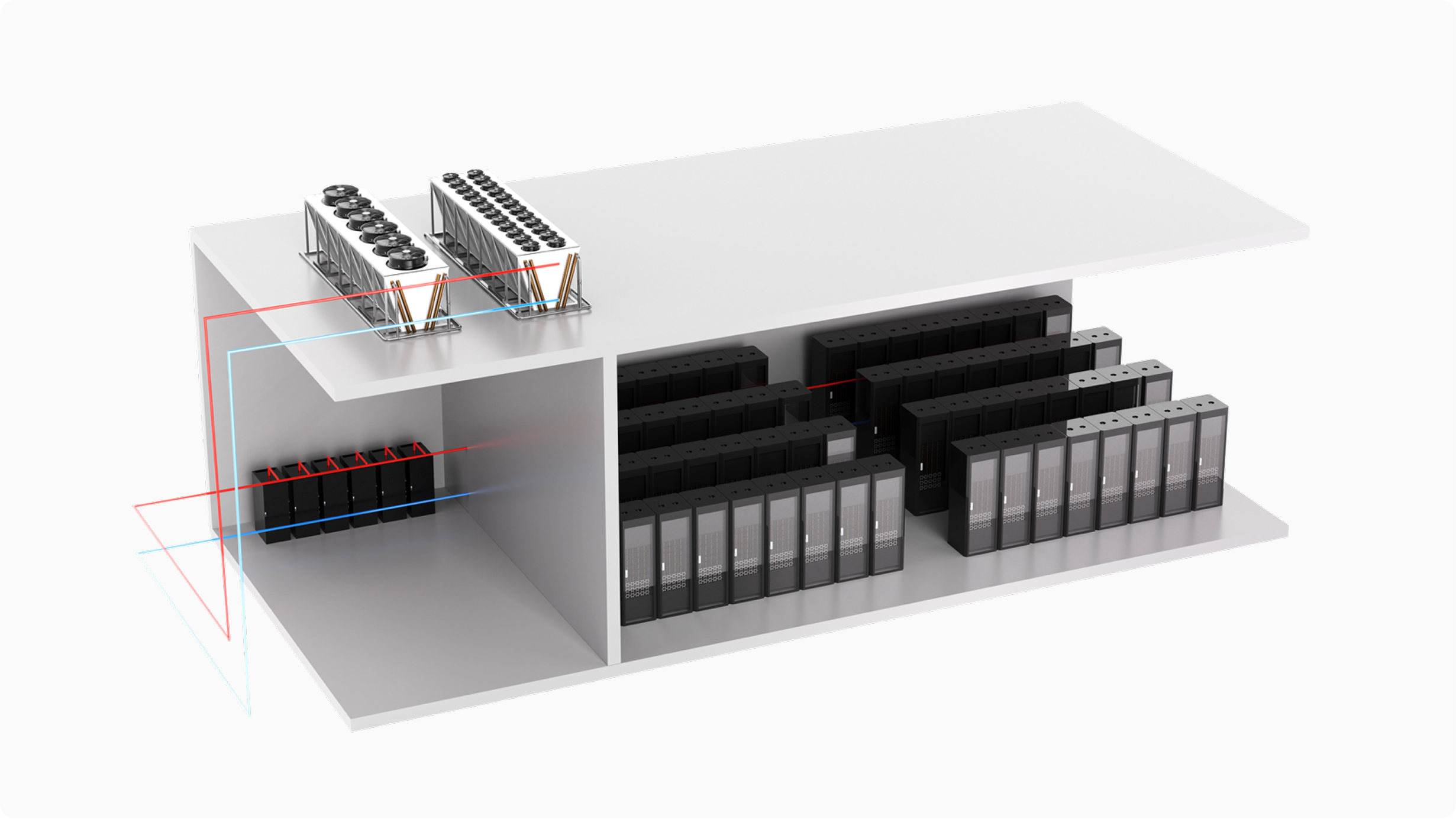
Historically, many dry coolers have used smaller fans originally designed for traditional commercial HVAC systems. A single dry cooler can require many of these fans. Across a large data center site, that quickly adds up to hundreds or thousands of motors, cables, connections and potential service points.
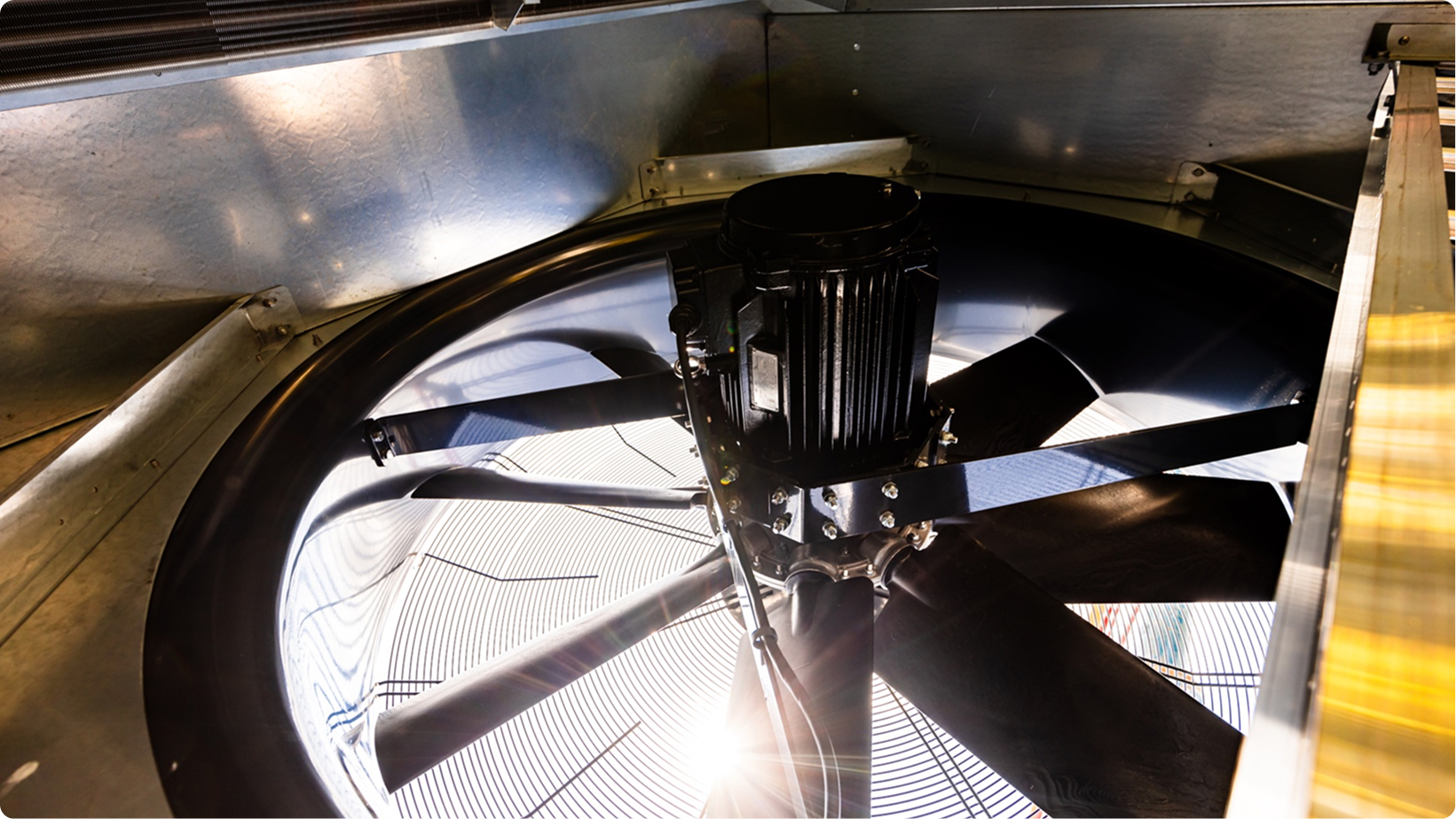
Large axial fans can move significantly more air at lower rotational speeds. This improves the energy-to-airflow ratio and can reduce the number of fans needed in the overall system.
With Multi-Wing’s large axial fans, OEMs and system designers can rethink the fan layout around fewer, larger units instead of scaling up complexity with more small fans.
Fewer fans also mean simpler system integration. There are fewer components to install, monitor and maintain, and fewer potential points of failure over the lifetime of the cooling system.
Rethink the system, not just the component
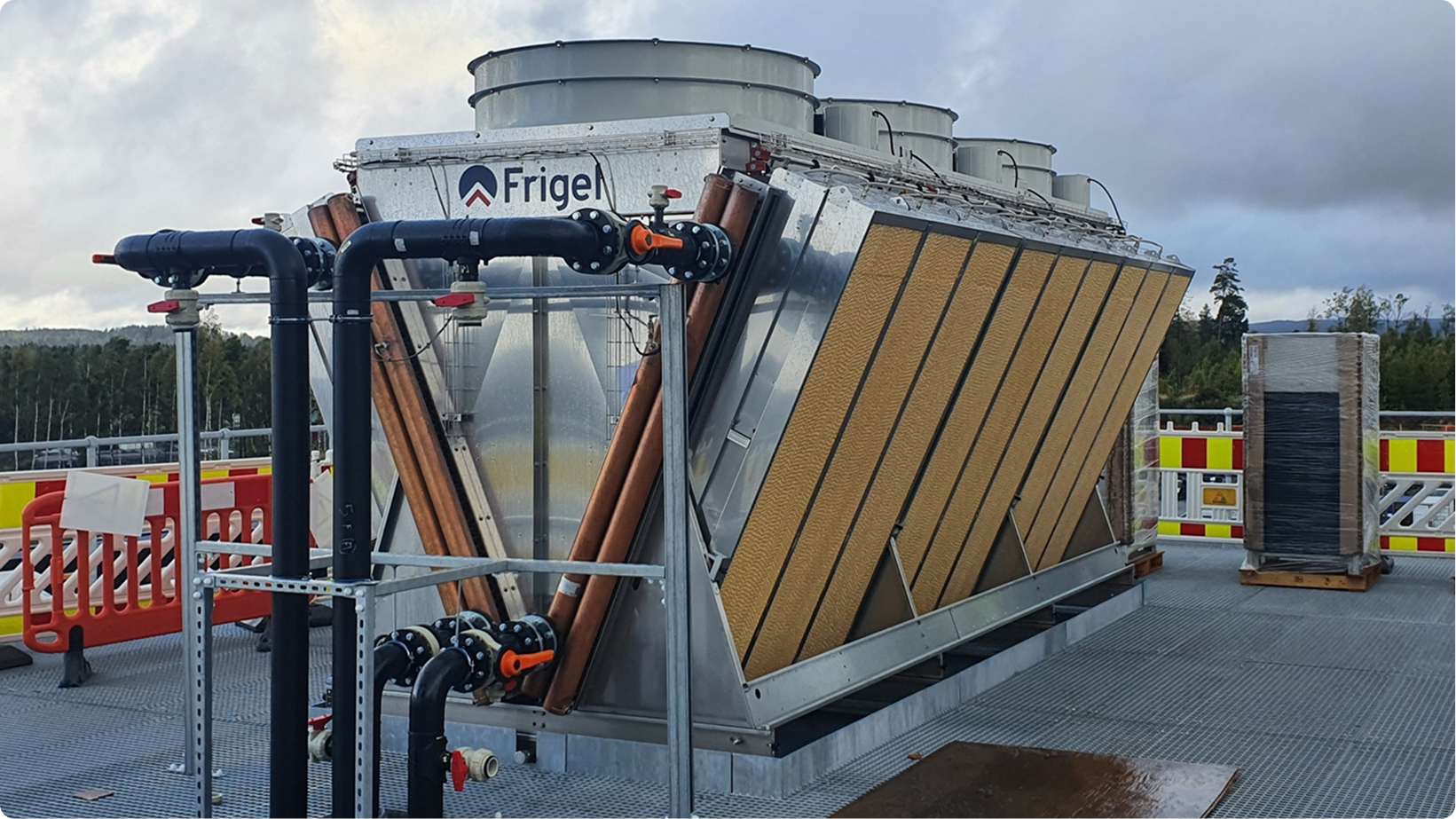
Large fans are not just bigger versions of standard fans. To get the full benefit, the fan needs to be designed for the application.
Multi-Wing’s modular fan platform gives engineers more freedom to match the fan to the duty point. Diameter, blade shape, pitch angle and number of blades can be configured to suit the required airflow, pressure, efficiency and noise performance.
That matters because many conventional fans are based on fixed designs. The system has to adapt to the fan. With a modular approach, the fan can be optimized for the system.
For OEMs, this creates more design flexibility. For operators, it can mean better performance, lower energy use and a cooling solution that is easier to scale.
Lower noise by design
Noise is becoming a bigger issue for data center operators, especially in urban, edge and regulated environments where sound limits are strict.
Larger fans can help. Because they move more air at lower speeds, they typically create lower blade-pass frequencies, lower tip speeds and less mechanical turbulence. The result is a different acoustic profile: less high-pitched fan noise and lower perceived sound levels.
The system-level effect is just as important. Four smaller fans can produce the airflow of one larger fan, but the extra sound sources add noise. By reducing the total fan count, larger fans can help lower overall sound pressure levels and simplify acoustic planning.
Multi-Wing’s application-specific fan configurations help engineers balance airflow, efficiency and acoustics from the beginning of the design process.
Efficiency follows demand
Cooling demand changes with workload, weather and operating conditions. That is why large fans become especially effective when combined with EC motors or intelligent variable-speed control.
Instead of running at a fixed speed, the fan system can adjust airflow to match real-time thermal demand. This helps reduce unnecessary energy use while maintaining reliable heat rejection.
At data center scale, even small improvements in fan efficiency matter. Cooling can represent a significant share of facility-level power consumption, and dry coolers still require energy-intensive air movement even when liquid cooling is used inside the building.
Fan facts in short
Modern data center cooling is moving toward larger, more demanding external heat-rejection systems. That makes fan strategy more important.
Larger, modular fans can
help move more air with fewer units
reduce system complexity
improve acoustic performance
support lower energy use and easier maintenance.
be configured to match the actual application.
For data centers, dry coolers, cooling towers, air-handling units (AHUs) and exhaust systems, Multi-Wing’s large, modular fan solutions offer a practical way to build quieter, more efficient and more resilient cooling infrastructure.